
The ₹20,000 question
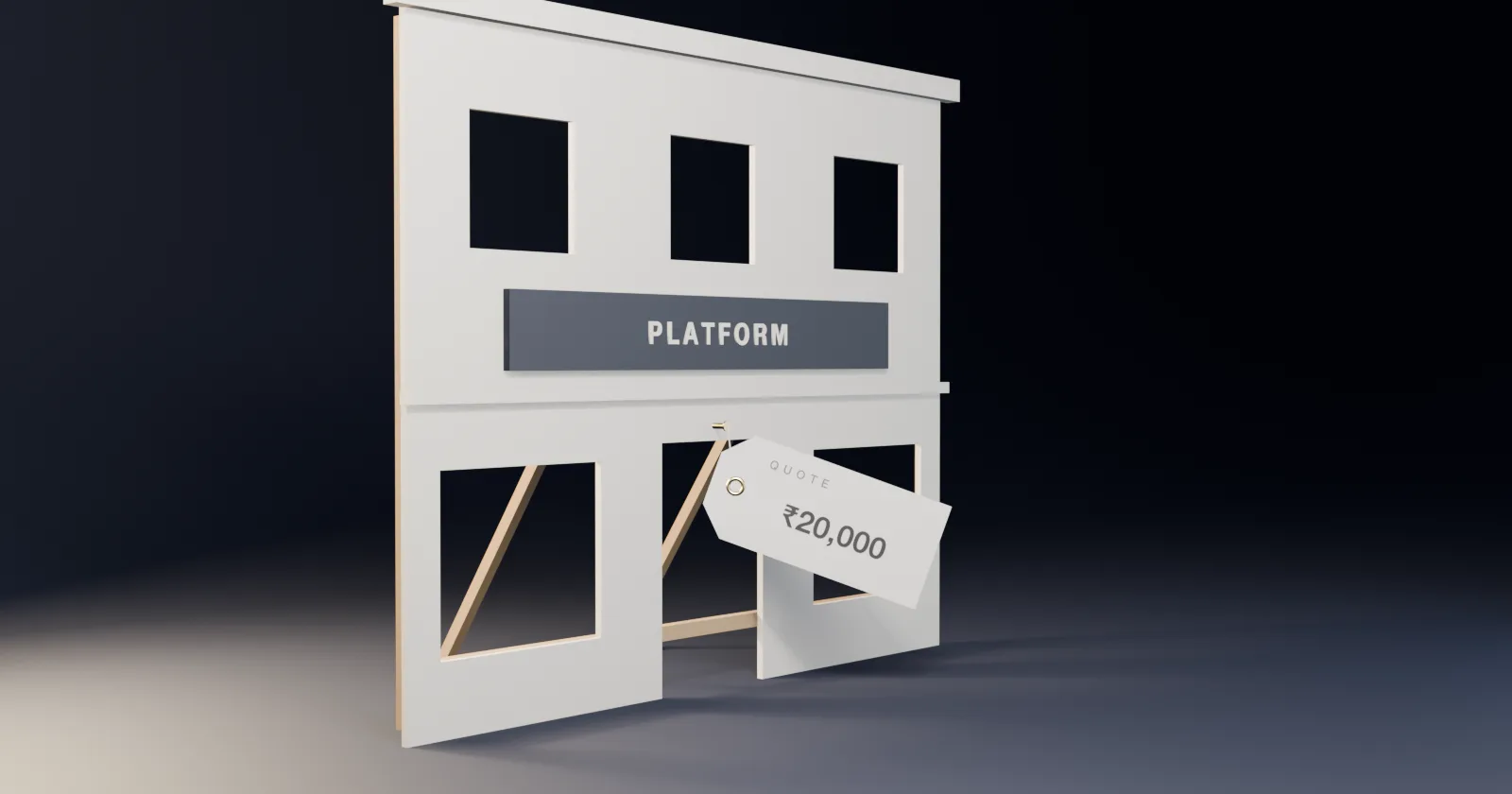
₹20,000 buys a website. It doesn’t buy a platform.
Last week someone filled in the form on my site with a project I’d been hoping for. An online coaching business: recorded classes, e-books, test series and quizzes on day one, live classes for up to a thousand students later, apps after that. Their budget was ₹20,000 to ₹25,000.
I’d put the first version of that at about ₹1.5 lakh.
Honestly? Neither of us was being unreasonable, and I think the gap is worth writing about, because it’s the most common gap in my line of work.
Why ₹20,000 sounds right
Look at what’s advertised today. On Meta’s ad library this week you can find Shopify stores for ₹4,999 and websites for less than that. Website cost guides for Indian small businesses put a basic site anywhere from ₹10,000 to ₹80,000. If you’ve seen those numbers, then ₹20,000 for “a website” feels generous.
And for a website, sure, it is. The trouble is that what this founder needed wasn’t really a website. It was a platform: student logins, payments, video that doesn’t leak, tests that mark themselves, and a way for their team to add more every week. A website shows people what you sell. A platform runs the business itself. The second one takes weeks to build properly, if not months to perfect. Not days.
If anyone guarantees you that they can build a platform in days, trust me, I can poke a million holes in that platform with little to no effort whatsoever. One security firm found 5,000 apps built on vibe-coding platforms with virtually no security or login of any kind, many of them leaking medical and financial details. I wrote more about that in my last post.
What ₹20,000 gets you from me
- A launch page or a small site built for your business, not a template with your logo on it.
- A form that lands in your inbox or straight into your sales sheet.
- Google Analytics and the Meta pixel set up and checked, so when you run ads you know whether they work.
- The things Google needs to find you: page titles, a sitemap, and product or business details it can read.
- Pages that load fast on mobile data, because most of your visitors are on a phone.
- Privacy and terms pages, if you plan to run lead ads.
- Built in about a week, with a preview link you can open while it’s being built.
- Everything in your name: the domain and every account from day one, and the code once it’s paid in full. Half up front, half at launch.
What it doesn’t get you
- Logins and member areas.
- Payments inside a custom-built site.
- Video hosting, courses, tests and anything else that has to know who your user is.
- Dashboards for your team.
- Apps.
None of that is a fancy extra. Each one is days of work on its own, and a platform needs most of them at once. Most of my time is spent perfecting them, making sure there are no ways to bypass any of the steps or restrictions. Security is of utmost importance when it comes to platforms.
If your budget is ₹20,000 and you need a platform
You still have good options. These are the three I’d give anyone:
- Rent the platform, pay for the setup. For courses, there are hosted platforms that already handle logins, payments, video and tests for a monthly fee. Put your money into setting one up properly in your name: your branding, your domain, your courses laid out the way your students think, and tracking that tells you where they come from. This is what I suggested to the coaching founder.
- Build the first piece only. One page that sells one course, a form, a WhatsApp button and payment links. Start selling, then build the platform from what your first students actually use.
- Wait and save. If the custom platform is the business, it’s worth paying for properly, instead of coming back to it again and again.
What I’d avoid is a ₹20,000 “platform”. Something gets cut to hit that number, and usually it’s the parts you can’t see: security, backups, and the tracking that tells you whether your ads are working.
Why my prices are on my site now
After that enquiry I put starting prices on my site: small fixes from ₹5,000, websites and store setups from ₹20,000, apps and platforms from ₹1 lakh. Not to scare anyone off, but so we both know which conversation we’re having before your first message.
If you’re not sure which one you need, send me what you have in mind. I’ll tell you honestly, even if the answer is a ₹4,999 template and not me.
Sources
- Meta Ad Library: active ads in India for “shopify developer”, checked 8 November 2026
- How much does a website cost in India?, Hostinger
- Vibe-coded apps are spilling users’ personal information, Futurism, 10 May 2026